


Time:Oct 30,2026
By:Bailu
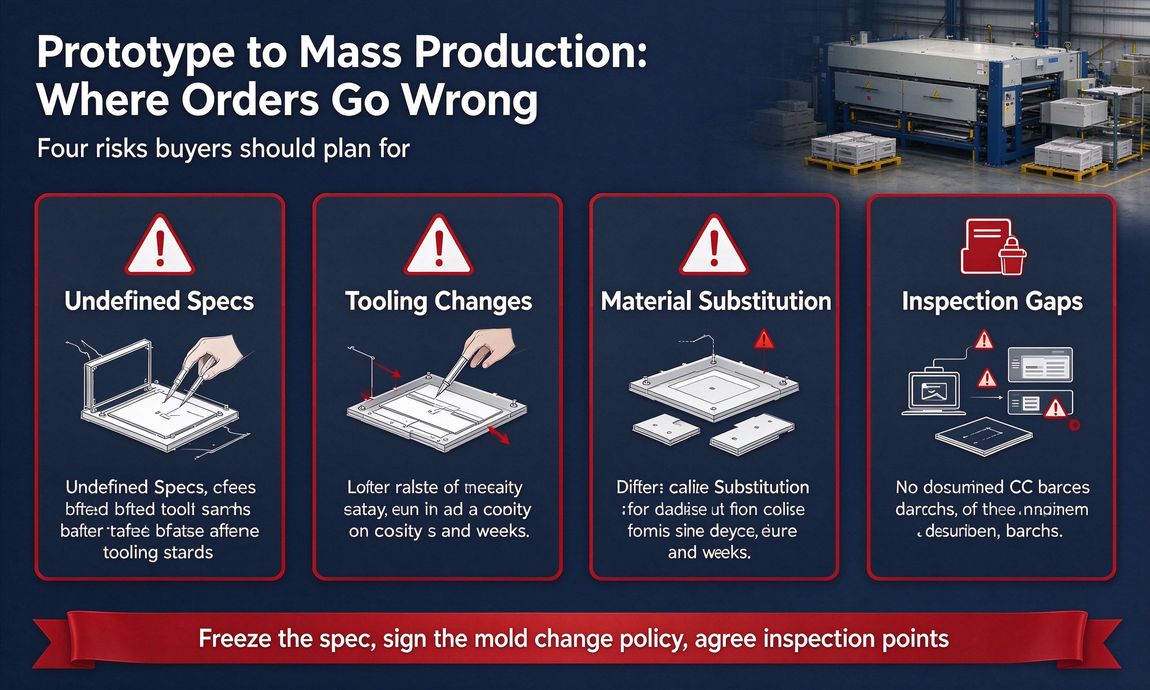
The prototype looks great, the buyer approves the sample, and then production quietly goes sideways. The transfer from prototype to volume is where OEM projects earn their reputation for surprise delays, because a prototype proves a part can be made once — not that a process can make it ten thousand times. A custom prototype to mass production service that works treats the transfer as a controlled change rather than a handoff. This article names the four risks that appear in that gap and how to close each one before it becomes an invoice.

Prototypes are usually machined or printed, made by skilled hands with generous cycle time. Production parts are molded, stamped or cast by a process with fixed parameters. The difference matters: a 3D-printed sample can hide draft-angle problems that a mold will expose on the first trial, and a hand-finished prototype can look better than the production part ever will. Treat the prototype as evidence about the design, and ask one question at every approval: what changes when the process changes? The answer defines the work still to be done.
The most expensive risk in the transfer is a design that keeps changing. Every revision after tooling starts stops the mold shop, rewrites the process and reopens the inspection plan. The fix is a frozen baseline: the buyer signs the final CAD, the material spec and the finish class before steel is cut. Once the baseline is signed, changes move through a written change-order process with cost and time impact attached — not through email chatter where "minor tweak" means three weeks and a second mold. If your supplier resists freezing the baseline, ask yourself why they want the door open after the contract is signed.
Molds are living documents during trials. Steel adjustments, gate modifications and ejection fixes are normal in the first weeks of a tooling program. What turns normal adjustment into risk is silence: the buyer learns about the third revision only when the invoice arrives. Close this by asking for a trial report after every T-series run — what was changed, why, and what it costs. Bailu Tech sends this report with each trial, so the tooling budget does not move without a paper trail, and the buyer can see at a glance whether the mold is converging or drifting.
Production material can drift from the prototype without anyone intending it: a resin grade changes at the distributor, a colorant batch varies, a supplier substitutes an "equivalent" grade without saying so. When the material changes, the part can change — shrinkage, stiffness, surface, even color under different light. The protection is simple: name the exact grade in the contract, require material certificates with each lot, and state in writing that substitution requires prior approval. A factory that pushes back on that clause is telling you something about how it runs production.
Quality that worked at pilot can decay across production runs as tooling wears, parameters drift and operators change. The gap appears when inspection is an event rather than a habit. Expect incoming checks, in-process sampling and a final inspection report with every shipment. The reports should name measured values against the tolerance, not just say "passed". This documentation is what turns a quality claim into evidence you can audit — and it is the difference between catching a bad batch at the factory and catching it at your customer's door.
The sample sign-off is the hinge of the transfer, and its quality decides how the risks behave. A vague approval — "looks good" in an email — leaves the baseline soft; a structured sign-off names what was checked, what was measured and what was agreed as acceptable. For that reason, the sign-off should reference the same three documents the transfer depends on: the frozen CAD, the inspection criteria and the approved sample itself. When the buyer signs a clear baseline, later deviations are easy to see; when the approval is fuzzy, every later batch is a renegotiation.
The practical discipline is to approve with evidence: dimensions measured, photos taken, limits noted. Bailu prepares the sign-off package with the measurements attached, so the approval is a technical record rather than a sentiment. The same structure applies to material and finish approvals — each one fixes a variable that would otherwise drift in production. Buyers who sign with evidence tend to see fewer disputes, because the factory knows exactly what was accepted and what was not.
The pattern behind these four risks is the same: information stops moving at the moment the work moves. A controlled transfer keeps three documents alive from prototype to volume — a signed baseline, a change-order log and an inspection record. Ask your supplier which of the three they keep automatically; if they cannot point to all three, the transfer is being run on memory. The custom prototype to mass production service Bailu operates keeps these three documents active on every order, and the same engineers who reviewed your prototype run your trial, so the questions that should have been asked are not discovered after production starts. To see how the full chain is structured, the service overview walks through each stage, and the news archive carries case-level detail on how specific transfers were stabilized.
Let us brighten your life with safety, efficiency,and expert craftsmanship.
Contact Us
Phone : +86-159 0682 2387
WhatsApp/Wechat: +86-159 0682 2387
Email : info@bailusolution.com
Copyright © 2026 Huzhou Bailu Technology Co., Ltd. All Rights Reserved. Design by BONTOP.