


Time:Oct 30,2026
By:Bailu
A gym machine component passes the static pull test in the sample lab and develops a hairline crack after one season of daily use — the classic failure of designing for a snapshot load instead of a lifetime of cycles. Fitness equipment custom parts OEM projects are loaded differently from most consumer products: the user is heavier than the drawing assumes, the load is dynamic, and the motion repeats thousands of times a week. This article covers how to optimize the design of loaded plastic and metal parts before tooling, so the component survives the gym floor instead of the showroom.

A treadmill frame, a weight-stack guide rod, a handlebar cover that a user grips and yanks — each of these sees impact, not just weight. People lean harder than the design case, they drop onto machines, and they misuse equipment that was not meant for that exercise. The first optimization step is mental: design the part against a credible worst user rather than the average one, and document the assumed load case so the factory and the buyer are checking the same number on every drawing revision. Commercial clubs run machines in three daily shifts, home gyms run them evenings and weekends, and a resort gym lets untrained guests treat the equipment as unknown territory. The assumed duty cycle should be written down the same way as the load itself, because a bracket designed for light home use arrives at a club with months of abuse behind it. Buyers who sell into both channels usually price two structural tiers rather than pretending one component covers both.
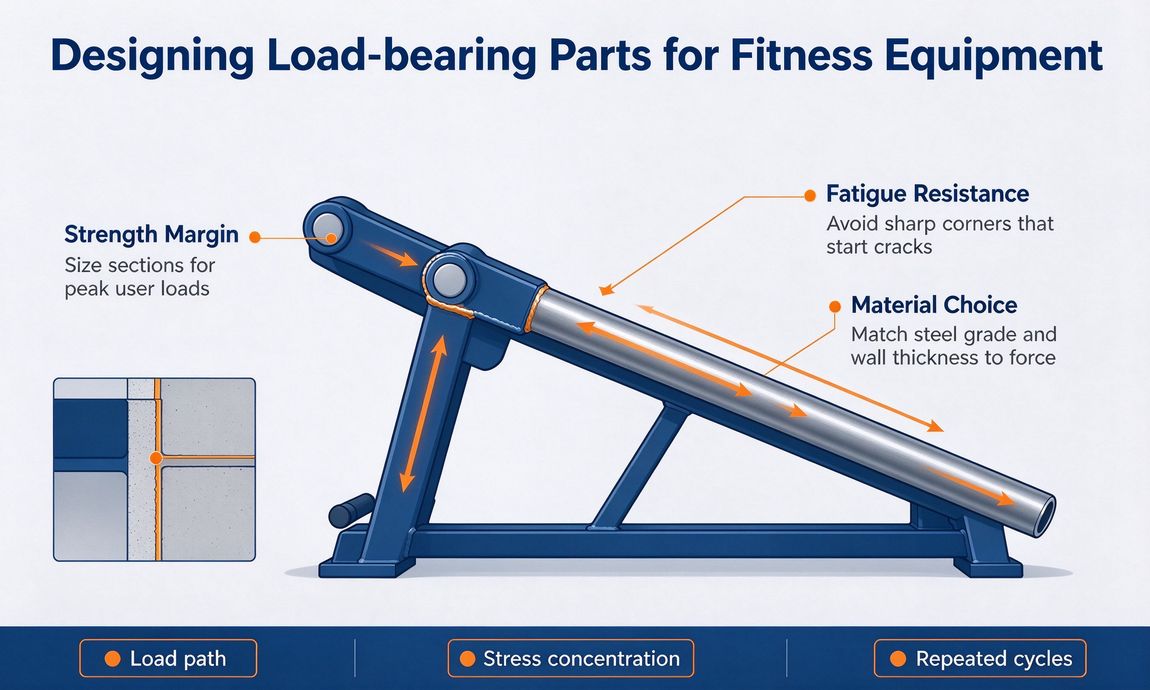
Geometry carries strength without adding material. Smooth section changes beat abrupt steps; gussets at joints distribute the load instead of concentrating it at one corner; bolted interfaces should clamp evenly with spacers that keep the load path straight. Where a plastic cover bridges between metal brackets, glass-filled engineering grades and ribbed structure do the work that a thin plain wall cannot. These decisions cost nearly nothing on screen and turn into expensive field failures once the machines are installed in homes and clubs. On bolted interfaces, an even clamp matters as much as the bolt size: spread loads with washers or thick local pads, and keep the tension direction aligned with the part's strongest axis. Tube diameters and wall sections chosen against the documented load case leave room for the extra torque a user applies when something sticks.
A part that survives a pull test can still crack after a million repetitions, because fatigue lives in stress concentration. Sharp internal corners, notches, weld toes and unblended cut edges are the places cracks start. The design rules against this are straightforward: blend every transition, keep surface finishes smooth on loaded paths, avoid machining marks that run across the stress direction, and treat welds on load-bearing tubes as features that need finishing rather than just fusion. The goal is a part whose worst stress lives in a calm region instead of at a corner that flexes with every rep. Surface preparation before powder coating is part of the fatigue plan too: sharp blasting marks on a loaded tube start cracks the same way a notch does. Batch checks that confirm the section and the finish are the difference between a sample-level approval and a production that holds it for the machine's intended life.
Structure usually stays in steel — the grade and wall thickness chosen against the documented load case. Covers, shrouds and contact pieces move to engineering plastics such as glass-filled nylon where stiffness and fatigue resistance matter, and softer overmolds where hands land. Sheet-metal brackets, welded frames and molded plastic supports are often combined in one machine, which is why sheet metal fabrication planning should run in parallel with the plastic part design instead of after it. Choosing the materials together keeps the interfaces simple instead of discovering at assembly that a bracket and a cover do not meet.
Optimized geometry still needs a process that holds it. Welding fixtures keep tube alignment honest, batch checks confirm that the worst-case section stays within spec, and surface finishes that aid fatigue performance must survive the production run rather than exist on one polished sample. A supplier that quotes both the metal and the plastic parts of the machine can design their interfaces once, which removes a whole class of assembly surprises that appear when each part is designed in isolation. The welding fixture that holds tubes at a right angle, the dimensional check on the critical joint, and the finish process are not details; they are the part of the design that factory discipline has to reproduce every shift.
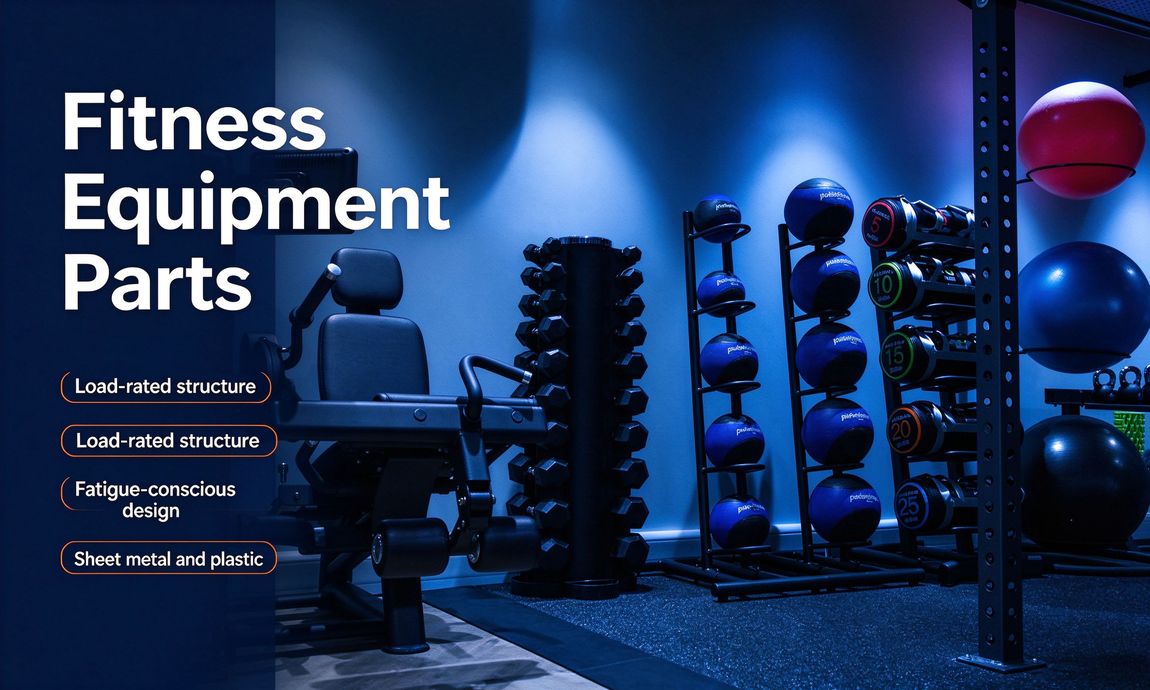
Load documents, a structural sketch review and a fatigue-aware geometry review are the starting points Bailu uses for gym equipment parts manufacturer projects, before any drawing goes to the shop floor. The fitness equipment project page shows the range of frames, brackets and molded supports the team has delivered. Bailu Tech keeps load-bearing sample parts in witness storage so later production stays tied to the approved design, and Huzhou Bailu Technology handles the metal and plastic sides together in one program. The tell of a mature supplier is that they ask about misuse and cycle counts before they ask about color.
Let us brighten your life with safety, efficiency,and expert craftsmanship.
Contact Us
Phone : +86-159 0682 2387
WhatsApp/Wechat: +86-159 0682 2387
Email : info@bailusolution.com
Copyright © 2026 Huzhou Bailu Technology Co., Ltd. All Rights Reserved. Design by BONTOP.