


Time:Oct 30,2026
By:Bailu
Your RFQ lands in the factory inbox with two lines of text and a rough screenshot, and three days later the quotation comes back full of assumptions you never made. This is the most common way RFQ conversations go wrong between overseas buyers and Chinese manufacturers — not because the supplier is careless, but because the request lacks the information needed to quote correctly. A custom OEM quote from China manufacturer is only as accurate as the input behind it, and most of the fix is paperwork you already have on your desk. Preparing the right documents before you send the RFQ turns a guessing game into a pricing conversation.

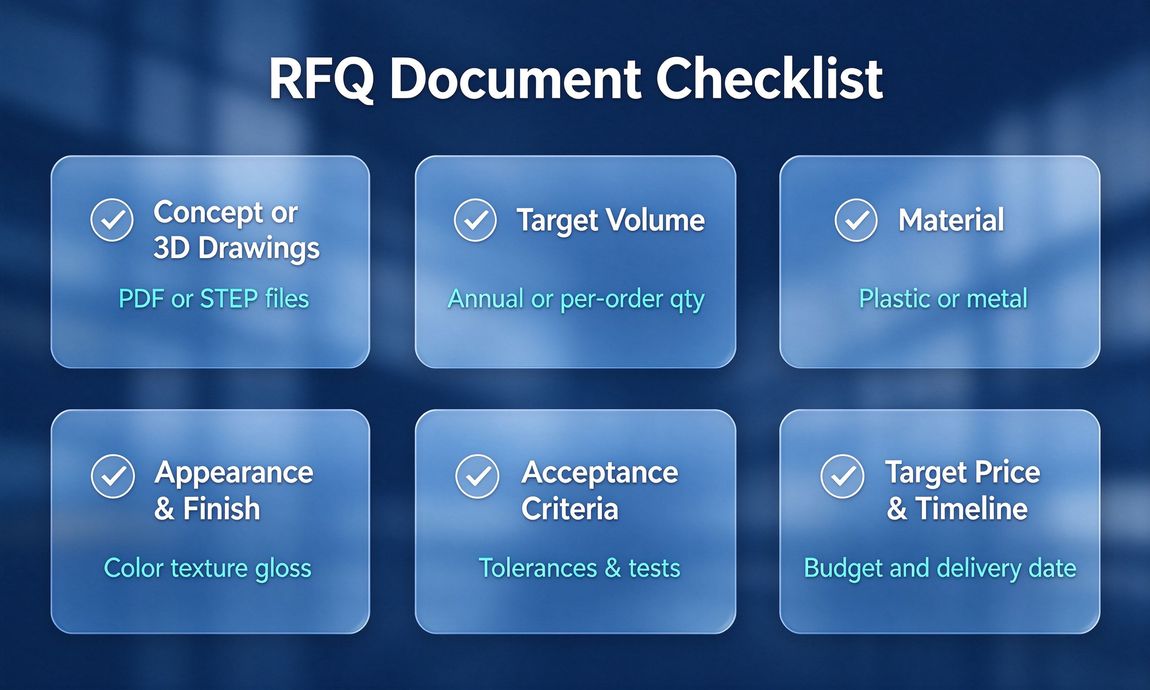
Drawings are the single highest-value document in an RFQ. A 3D STEP file lets the factory see geometry, wall thickness and mating features precisely; a PDF drawing adds the dimensions and tolerances that matter to you. If a full drawing does not exist yet, a clean concept sketch with the main dimensions, plus photos of a similar product, still beats nothing, because it lets the supplier estimate the process and the cost instead of guessing. When the file is missing entirely, expect the quotation to carry wide safety margins — those margins are the factory protecting itself against the unknown, and you end up paying for them. Even a rough dimensioned sketch is enough to start the conversation, because the factory can then ask the right questions instead of the generic ones.
State your expected annual volume and, if possible, the order split. Tooling amortization, mold cavity design, machine selection and per-unit price all react to this number. Ten thousand parts a year justify a multi-cavity mold and more automation; three hundred parts a year probably justify a simpler single-cavity tool and more manual handling. If you do not know the exact number, give a range with a realistic best case and worst case. Suppliers would rather quote two scenarios than silently pick one, and a range tells them you are thinking about the business rather than fishing for a low number.
Specify the material family or grade you expect — ABS, PC, PA66, aluminum 6061, stainless steel 304 — plus the finish you want: glossy or matte, textured or polished, painted or anodized. Material choice moves both the mold design, through shrinkage, flow and processing temperature, and the unit cost. If you have regulatory constraints, such as food-contact or flame-retardant requirements, include them here rather than discovering them after samples are made. A complete specification lets the supplier pick the right grade instead of the least expensive one that might fail your tests later.
Acceptance criteria are the rules for what counts as a good part: critical dimensions and their tolerances, allowable appearance defects, functional tests, and the sampling method. This belongs in the RFQ because it affects process design and inspection cost. A part that must hold a tight mating dimension needs different tooling and QC attention than a cosmetic cover with generous tolerances. When criteria are defined in the RFQ, quotations from different factories are comparable; when they are left out, each supplier quotes against a different standard and the lowest price usually means the loosest standard.
Give the supplier a target price range and a target delivery date, even if both are rough. A target price tells the factory which trade-offs are acceptable — more cavities, a different finish, or a more economical material. A target date tells them whether they need to plan a faster mold build or reserve production capacity. Neither number needs to be final; both stop the quotation from floating in a vacuum and reduce the rounds of back-and-forth that slow down every sourcing project. At Bailu Tech, we read the target price as a design input rather than a negotiation starting point, because it shapes the whole quotation structure.
Combining the above, a workable RFQ is usually one page of text plus attachments. It names the product, includes the 3D model or drawing, states annual quantity and order split, lists material and finish, defines acceptance criteria, and gives a target price and date. It also names the decision maker and a contact window so the factory knows who to ask when a question comes up. Sending this package costs fifteen minutes, and it is the fastest way to get a custom OEM quote from China manufacturer that you can actually compare and rely on. At Bailu Tech we see the difference immediately: complete RFQs come back with fewer clarifications, tighter pricing and a shorter quotation lead time.
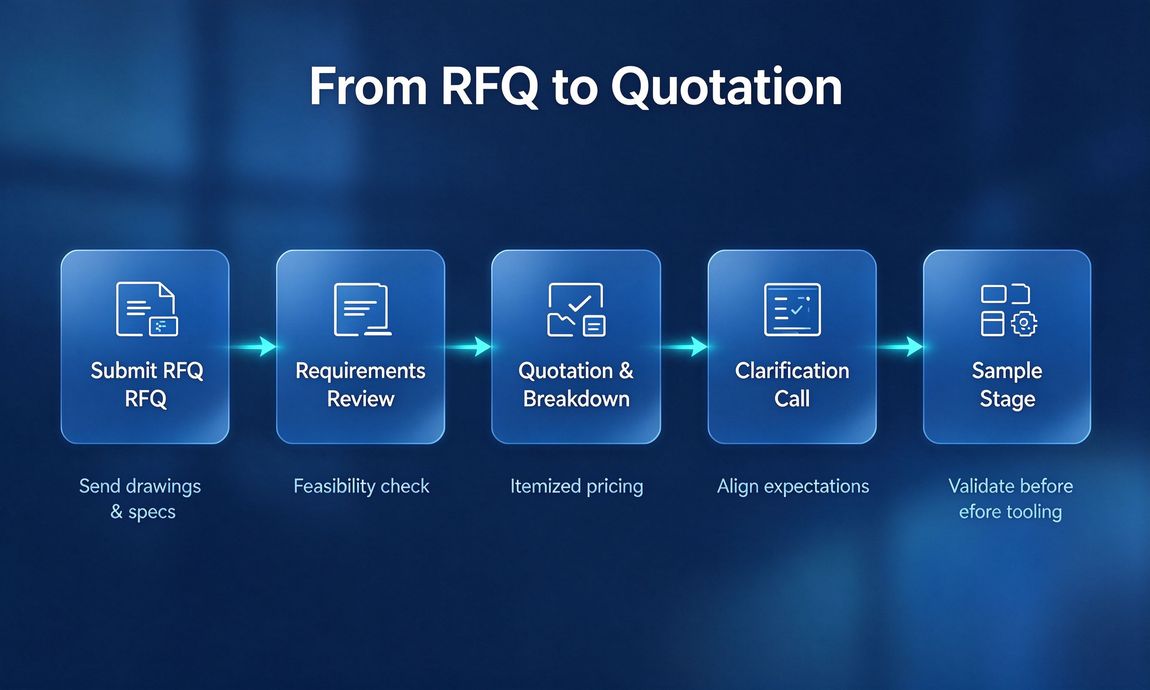
When the quotation comes back, read it against your RFQ line by line instead of comparing totals. Check whether the material matches, whether the tooling cost is separated from unit price, whether surface treatment is included, and which costs are marked as variables. If a supplier quotes far below the others, ask what they assumed — cheaper quotes often mean different assumptions about tolerance, finish or material, not better pricing. If you are still evaluating factories rather than prices, our guide on how to find reliable OEM ODM manufacturer in China covers the audit and selection side of the same decision. And when you are ready to move, send Bailu the full package from this checklist and the quotation will come back with the assumptions written on the table, not hidden in the fine print.
Let us brighten your life with safety, efficiency,and expert craftsmanship.
Contact Us
Phone : +86-159 0682 2387
WhatsApp/Wechat: +86-159 0682 2387
Email : info@bailusolution.com
Copyright © 2026 Huzhou Bailu Technology Co., Ltd. All Rights Reserved. Design by BONTOP.