


Time:Nov 02,2026
By:Bailu
Your product idea is the one thing you are not sure about sharing — the drawing leaves your computer, and suddenly a similar product could be running on a shop floor in another province before your first order ships. That worry is reasonable, but the realistic risk is not theft by a factory that wants your design. It is slow leaks: a file forwarded, a sample kept, a revision shared with the wrong department. The protection that works is a layer of operating controls, not drama. This article walks through the practical steps buyers take when they request a custom OEM quote from China manufacturer.

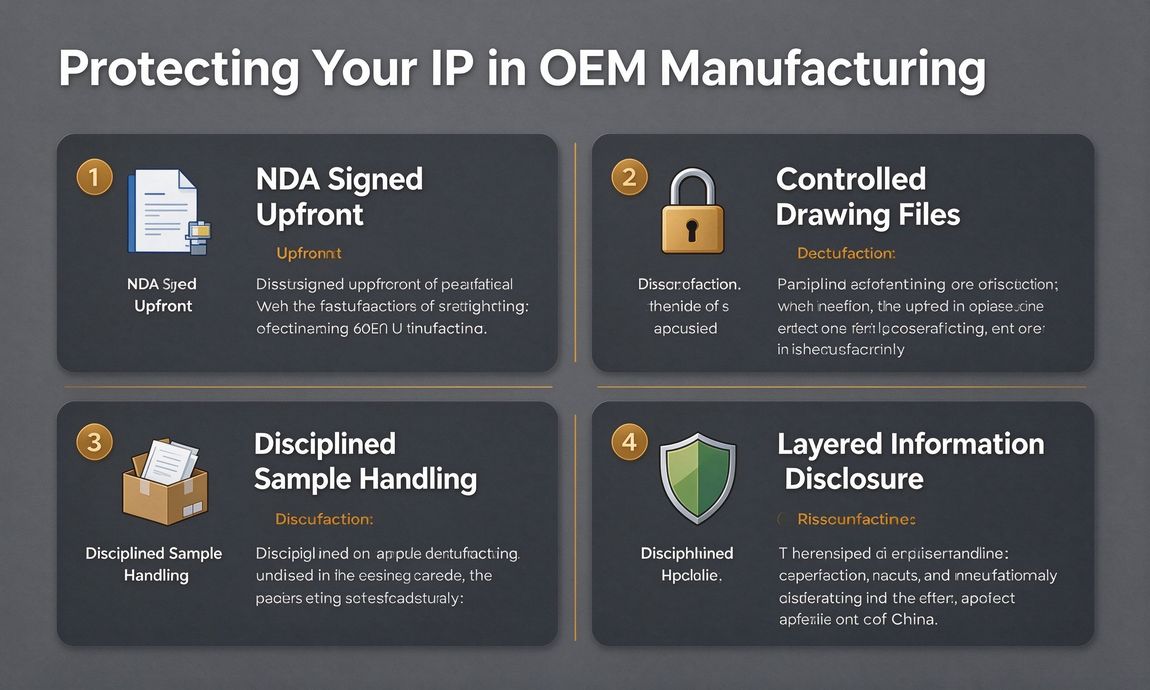
The first control is a written confidentiality agreement, signed on both sides before any drawing moves. It should name what is covered — drawings, samples, pricing, tooling records — for how long, and what happens on breach. A buyer who skips the agreement to save a day of legal review then sends a complete design package to a general inbox. When you request a quotation, attach the NDA to the first email and make clear that files follow only after it is countersigned. A serious factory expects this and treats it as routine, which is itself a useful filter for the partner you are evaluating.
You do not have to hand over the whole idea to get a price. Send the geometry the factory needs to quote the part: the dimensions, materials and process, but not the internal patent logic, the software behind the product, or the master file of your brand system. Layered disclosure means the tooling team sees the mold geometry, the assembly team sees the finished housing, and nobody holds the entire product. Files carry watermarks with the recipient's name, and the master drawing lives on a shared folder with access logs rather than a mailbox. The tooling team does not need your brand files, and the assembly team does not need your customer list; keeping layers separate costs nothing and limits exposure.
Samples leave the building more often than drawings. Prototype versions land on desks, get photographed, and end up in show bins at trade fairs without anyone tracking which revision was released. The practical rule: samples are numbered, the buyer approves disposal of old versions, and the factory does not keep spare samples of your product on display. Photograph the approved sample, store it as the golden reference, and compare every later shipment against that record instead of against memory. When the project ends, unused samples and old tooling records are either returned or destroyed, and that confirmation lands in writing.
Good relationships are valuable, but enforcement depends on paperwork. The tooling you pay for should be documented as belonging to you in the supply agreement, so a dispute later starts from a written position. Trademark and design registrations in your target markets are also worth doing before the tool is cut — they are the lever you use if a product appears elsewhere, and they matter more than the local dispute. Factories that depend on repeat customers have little interest in a buyer's design walking; the paperwork makes that interest enforceable for both sides. Keep the agreement in the project folder, and revisit it when a new subcontractor enters the picture or the scope of the product changes.
The quiet exposures are the ones nobody intends: a sales contact who leaves and takes the drawing file, a supplier's subcontractor who sees the mold, a photo of the part on a public social account. Asking who else touches the project, naming subcontractors in the agreement, and asking the factory not to publish your product in their portfolio closes most of these. Small habits — revoking access when the project pauses, updating the file folder when staff change — cost nothing and catch what the NDA cannot see.
A one-page NDA that only says "do not disclose" leaves the important questions open. It should name the specific risk points in your project: the tooling geometry, the supplier list, the test data and the pricing, and it should state the term in years. It should also say who is covered — the factory and any subcontractors they use — because a subcontractor who did not sign anything is outside the agreement. Expect the factory to negotiate the wording, not refuse the subject; refusal at this stage is information about the partner. Bailu countersigns customer NDAs on the standard flow and shares the subcontractor list when the buyer asks, because IP protection is a shared condition of the project rather than a buyer-only concern. When the wording comes back marked up rather than refused, you have learned something useful about the team you are about to work with.
Run the sequence in order: sign the NDA, send the minimum file set to quote, mark watermarked drawings, agree sample and disposal rules, and record tooling ownership in the supply agreement. Bailu follows exactly this sequence for new buyers, because protecting the customer's design is how a long project starts. You can start the conversation through the contact page, and read how other buyers structured their first project in the news page. Bailu Tech treats IP protection as a routine operating step rather than a reason to refuse good engineering work.
Let us brighten your life with safety, efficiency,and expert craftsmanship.
Contact Us
Phone : +86-159 0682 2387
WhatsApp/Wechat: +86-159 0682 2387
Email : info@bailusolution.com
Copyright © 2026 Huzhou Bailu Technology Co., Ltd. All Rights Reserved. Design by BONTOP.