


Time:Nov 02,2026
By:Bailu
You ask for a custom bracket and come back with a quote that says minimum order 5,000 pieces — but your whole launch is 800 units. What went wrong? The short answer is that MOQ, or minimum order quantity, is not an arbitrary number the supplier invented. It follows the manufacturing process. A buyer who treats MOQ as a single number on a quotation ends up either over-ordering or walking away. This article explains why MOQ differs by process, where the lower floors actually sit, and how to ask a custom OEM quote from China manufacturer in a way that matches your real volume.

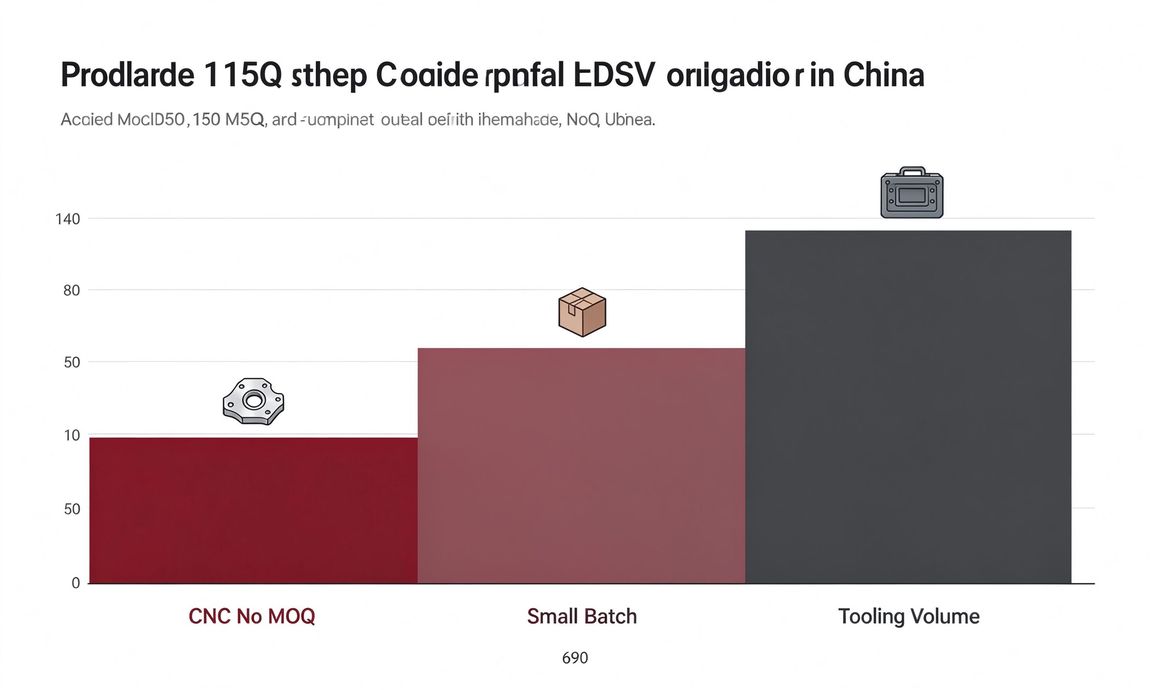
MOQ exists because some processes cost a fixed amount to set up, and that setup has to be spread across enough pieces. The size of that fixed cost decides the minimum. CNC machining clamps a blank and cuts it; setup takes minutes, so even one part is viable, and the per-piece cost falls as the run grows. Injection molding and die casting need a hardened tool that takes days to machine; the tooling cost is large regardless of volume, so the supplier wants enough units to amortize it. Sheet metal sits between the two. A buyer who compares two quotes and sees very different MOQs is usually looking at two different processes, not two different levels of cooperation.
If your project is still being refined, or your launch volume is small, the right process is the one without a tool. CNC machined parts, 3D-printed parts and sheet-metal prototypes have little or no minimum, because there is no mold to cut. You can order ten, fifty or two hundred pieces and pay a per-piece rate that reflects the machine time. This is the route for market testing, low-volume SKUs, spare parts and short accessory runs. The trade-off is that unit cost is higher than a molded part, and the process does not scale to tens of thousands. But for a first order, this is the floor that lets you start without committing to a tool.
Once the design is stable and volume is real, a molded or cast part brings lower unit cost — but it carries a tooling investment and a minimum. The minimum is usually set so the tool amortizes across a reasonable run, often in the thousands rather than hundreds. The exact number depends on part size, cavity count and steel grade. A simple bracket may have a modest floor, while a complex housing with multiple side actions carries a higher one. The key point for a buyer is that the MOQ here is a commercial decision about amortization, not a refusal to help. Understanding the amortization logic is what lets you negotiate the floor against your real forecast. Bailu quotes tooling and unit price separately so you can see how the minimum is built.
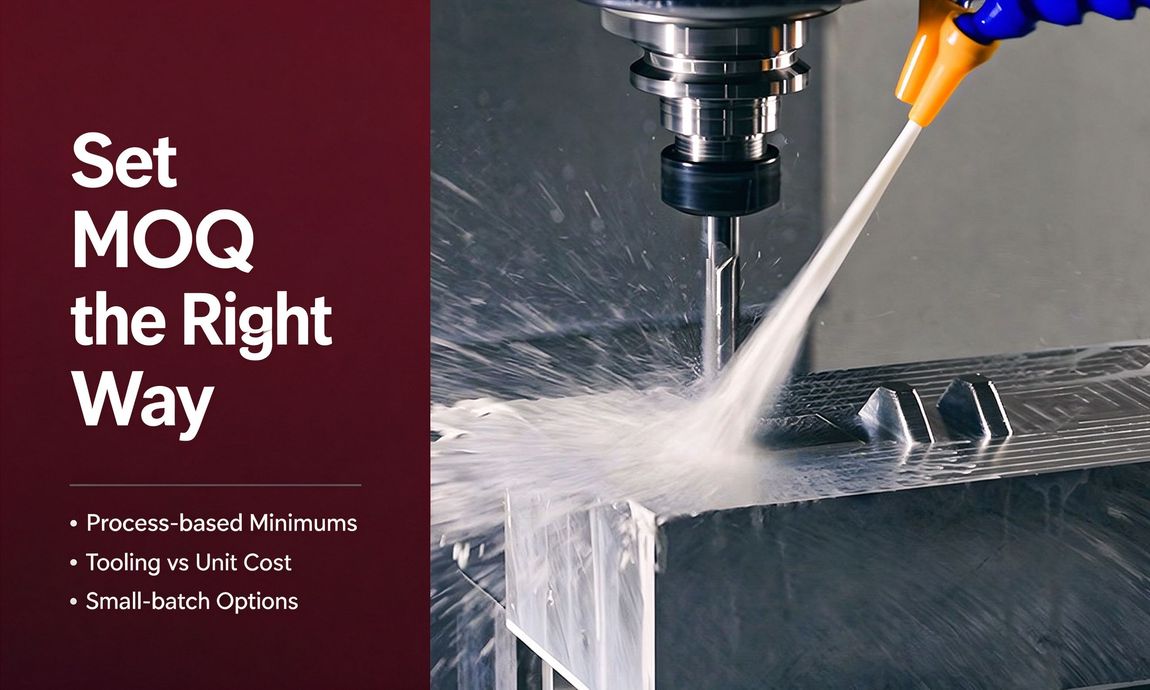
Buyers with a few hundred units have more options than they assume. One is the no-tool route: CNC or urethane casting can produce a few hundred functional parts at a higher unit price but with no mold. Another is a softer tool — an aluminum or rapid mold that costs less than a hardened production mold, suited to a few thousand shots. A third is combining variants of the same family on one tool, so the shared setup is spread across several SKUs. Each option trades unit price against tooling risk. The mistake is asking a high-volume injection shop for 300 pieces as if it were a prototype; the right move is to describe your volume and let the supplier match the process to it. This is exactly the conversation Bailu starts with a new buyer, because the process choice matters more than the order number on the page.
A useful quotation request gives the process enough to be honest. Send the drawings, the material, the finish, and your real annual or first-batch quantity — not a round number you think sounds better. Then ask for three tiers: the no-tool small-batch price, the amortized tooling price at your target volume, and the unit cost at double that volume. This shows the break-even point where molding becomes cheaper than machining. If you are still vetting factories, the contact channel on the site is the place to send those requirements rather than negotiating a single number. Buyers can also read recent project notes on the news page to see how volume decisions translated into process choices.
A reasonable MOQ expectation is one that matches both your volume and the process. Do not expect a molded part to run at prototype quantities, and do not pay a mold investment for a product you have not tested yet. Start no-tool while you validate, move to a tool once the demand is real, and treat the minimum as an amortization conversation rather than a wall. Bailu walks buyers through that sequencing, quoting CNC for the trial and molding for the scale-up, so the MOQ you agree to is the one your order can actually support. That alignment up front is what prevents the awkward re-quote halfway through the project.
Let us brighten your life with safety, efficiency,and expert craftsmanship.
Contact Us
Phone : +86-159 0682 2387
WhatsApp/Wechat: +86-159 0682 2387
Email : info@bailusolution.com
Copyright © 2026 Huzhou Bailu Technology Co., Ltd. All Rights Reserved. Design by BONTOP.