


Time:Nov 02,2026
By:Bailu
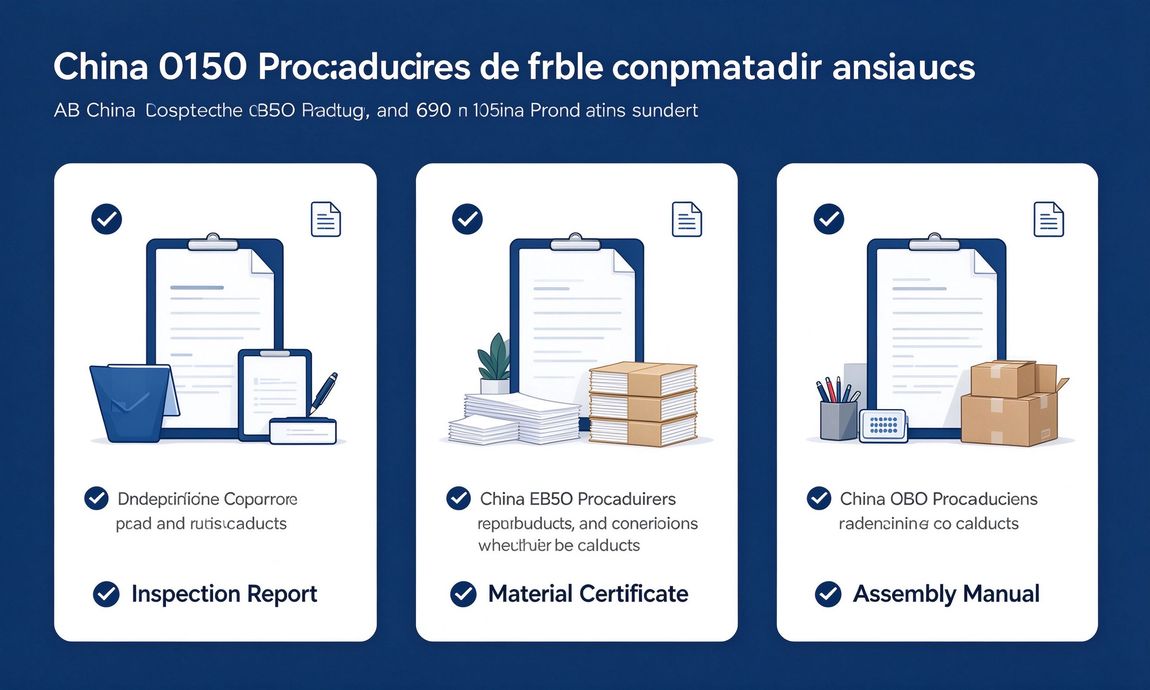
The shipment clears customs and your warehouse team opens the first carton — but there is no inspection report, no material certificate, and no paper that says the parts match the approved sample. You now have goods you cannot fully receive, because receiving is not only about boxes arriving. For an overseas buyer, the paperwork that travels with finished goods is what turns a pile of parts into a traceable, sellable batch. This article lists the documents a China OEM manufacturer should hand over with the order, and why each one matters at your end.

A part that arrives without its documents is a part you cannot defend. If a customer asks what material it is made of, or which dimensions were checked, the answer has to come from a record, not a memory. Documents also protect the buyer in the other direction: they prove the factory ran the agreed checks, so a later dispute is traceable. OEM quality control for custom manufactured parts does not end when the goods leave the dock — it continues through the paperwork that accompanies them. A factory that treats documents as an afterthought is usually the same factory that kept the inspection as an internal habit rather than a delivered record. At Bailu, the inspection record is treated as a deliverable in its own right, not a working note that stays on the shop wall.
The first document is the batch inspection report. It lists the key dimensions and appearance features from the approved drawing, the measured values from sampling, and whether the lot passed. It should reference the inspection standard agreed at the pilot stage, and carry the date and inspector. This report is what your receiving team uses to confirm the shipment matches the sealed sample, instead of guessing. For a custom part, a bare "passed" line is weak; a useful report shows which features were measured and against what tolerance. If the buyer has specified AQL sampling, the report should state the sample size and the accepted defect count.
The second document is the material record. For a metal part, this means a mill certificate or material reference stating the alloy grade and, where relevant, the batch lot. For a plastic part, it means the resin grade and the supplier. This matters because the same geometry can be molded from a cheaper polymer that looks right but fails in use. A material record lets the buyer trace a field issue back to a specific resin lot, and it answers the compliance question a retailer or end customer may ask. It also flags the opposite risk: if a document lists a material that was not agreed in the order, the buyer has caught a substitution before the parts are sold, not after a customer complaint.
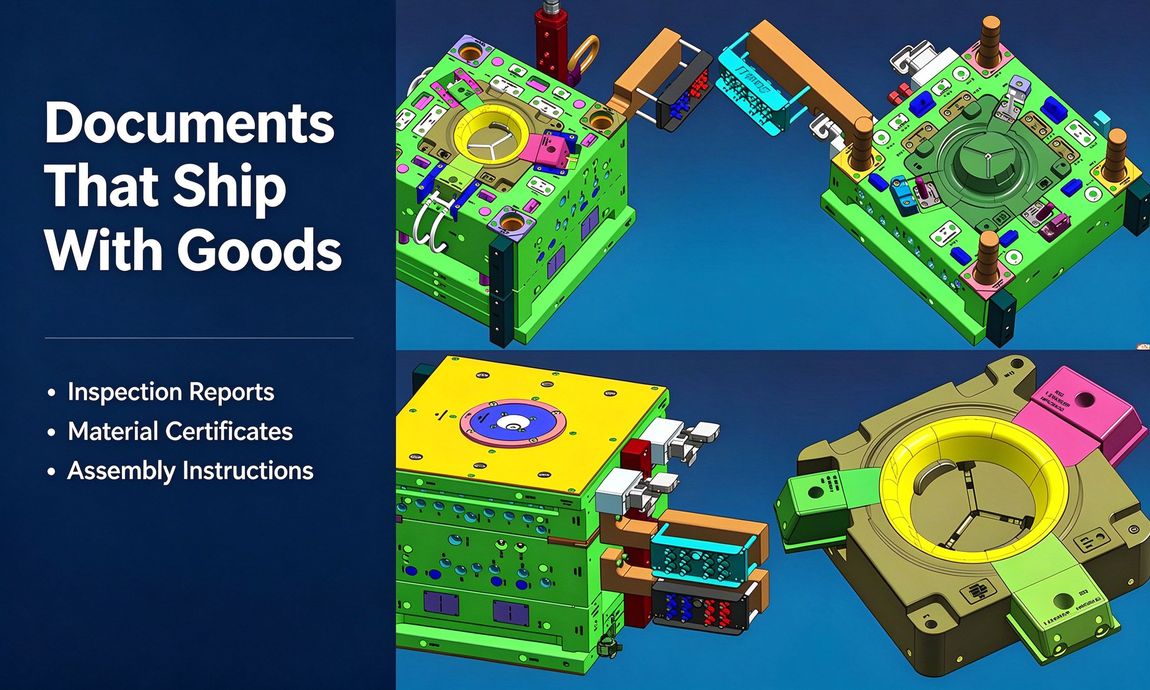
When the order is a finished assembly or a part that needs installation, the third document is the instruction set. Even a simple bracket benefits from a short sheet: the torque, the fastener type, and the handling notes. For an assembled product, this is the user manual in the required languages, with the labeled components and the assembly sequence. The mistake buyers make is treating instructions as a last-minute print job after the container has shipped. By then the language scope, the artwork and the regulatory labeling are already locked, and a correction means re-printing and re-boxing a landed shipment. The instruction set should be defined at the design stage alongside the packaging.
A few smaller papers round out a clean delivery. The packing list should break the carton count and the part numbers, so the buyer can reconcile against the purchase order. If the parts have a specific marking or label, a reference photo confirms it. A signed sample-approval sheet links the production lot to the approved prototype. For repeat orders, a record of the previous batch reference makes the new shipment comparable. None of these is complicated to produce, but their absence turns receiving from a half-hour task into a week of email threads. Bailu builds these small records into every shipment, so the buyer reconciles boxes against paper instead of reconstructing the batch after the fact. The contact desk on the site is where a buyer should list the required documents before the order, so the factory builds them into the delivery routine rather than improvising at the dock.
The reliable pattern is to agree the document list in writing when the order is placed, not at the dock. State which reports are required, what language the instructions use, and the format you want them in — printed, digital, or both. A factory that runs quality control as a documented process will produce these without hesitation; one that hesitates to commit to a document list is signaling that its inspections are informal. Recent project notes on the news page show how that paperwork habit shows up in repeat business. Bailu delivers the inspection report, material reference and instruction set together with the finished goods, so the buyer can receive, stock and sell the batch the day it arrives rather than chasing records after. That is the standard of OEM quality control a custom order should be measured against.
Let us brighten your life with safety, efficiency,and expert craftsmanship.
Contact Us
Phone : +86-159 0682 2387
WhatsApp/Wechat: +86-159 0682 2387
Email : info@bailusolution.com
Copyright © 2026 Huzhou Bailu Technology Co., Ltd. All Rights Reserved. Design by BONTOP.