


Time:Nov 02,2026
By:Bailu
The prototype fits, the client loves it, and the pushback on the timeline is why not jump straight into the full order? That shortcut is the one that catches buyers off guard. A pilot run is a small trial batch produced on the real production line, using the real tooling, material and process, before the full volume is released. It exists because a hand-built prototype proves the design, but it does not prove the factory can repeat the design every minute for hours. This article explains what a pilot run actually tests, and why skipping it to save a week usually costs a month later.

A CNC or 3D-printed prototype answers one question: does the geometry look and feel right? It is often made by a skilled technician by hand, with adjustments between cuts. A production part is made by a machine on a fixed recipe, unattended, thousands of times. The mold may fill differently than the cutter predicted, the cooling may warp a thin wall, and the surface finish may shift once the cavity cycles. The prototype that impressed the client tells you the product is good; it tells you little about whether the process is stable. The custom prototype to mass production service that a buyer buys is precisely the bridge that confirms the jump before the commitment.
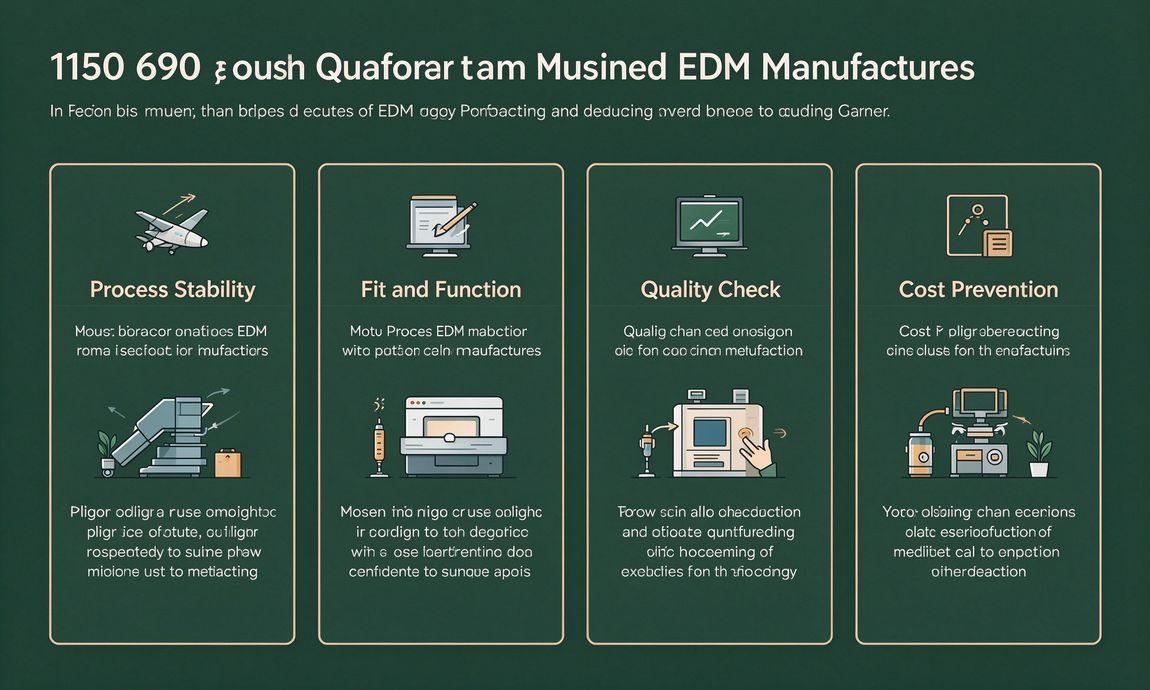
A pilot run usually covers a few hundred units, enough to expose process variation without spending the full material budget. The first target is process stability: do the cycle time, temperature and pressure hold steady across dozens of shots, or does the part drift after the mold warms up? The second is fit and function: do the parts assemble as the prototype did, with the real production tolerance rather than a hand-fit allowance? The third is quality: are the dimensions, appearance and marking inside the inspection standard, and at what rate? The fourth is cost: how much scrap, cycle time and secondary work does the real process actually consume? Each answer is data you cannot get from a single sample, and it is the evidence the buyer needs to decide whether the process is truly ready for a full release.
Skipping the pilot is usually framed as a time-saver. In practice it moves the risk to the most expensive moment. The factory starts the full run, and after a few hundred pieces the mold shows a persistent burr, the parts fail assembly, or the color is off. Now the buyer has a warehouse of half-conforming goods, a tool that needs revision, and a launch date already missed. The same problem found in a pilot run costs a day and a handful of parts; found in a full run it costs a rework campaign and a rewritten delivery promise. The pilot run is the cheap place to discover that the process is not ready.
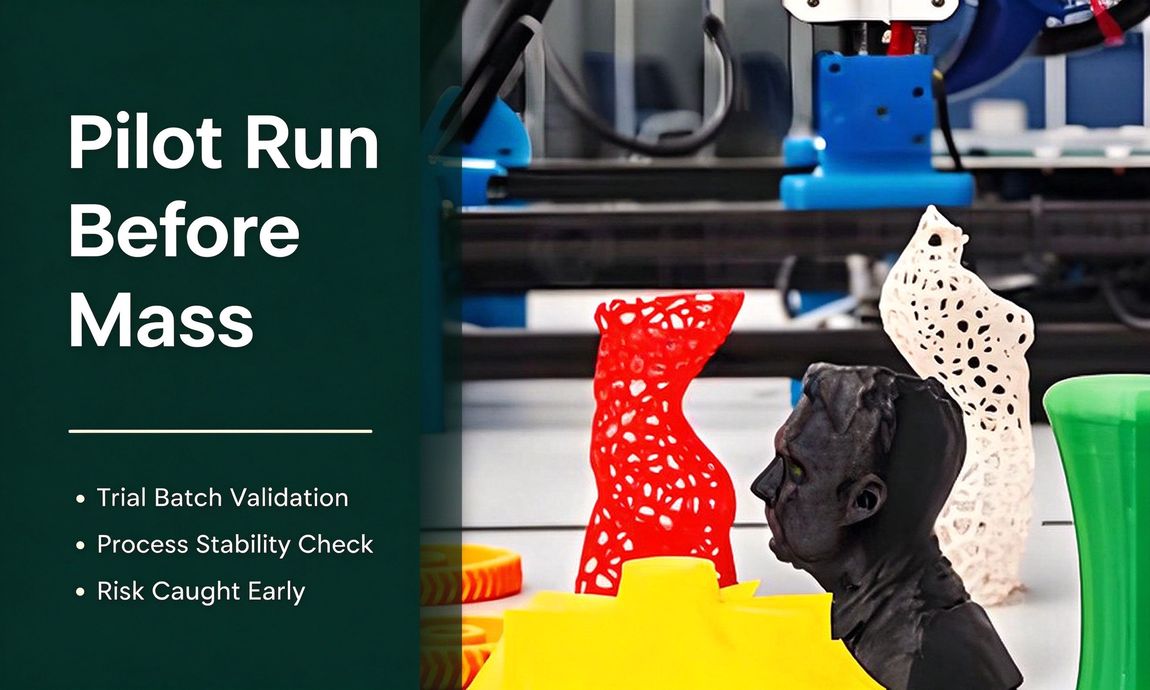
A pilot run is not just a smaller production; it is a decision gate. It should end with a clear go or no-go. If the process holds and the parts pass, the parameters are locked, a reference sample is sealed, and the full order is released under the same recipe. If something drifts, the cause is found and corrected — a gate position, a cooling channel, a material batch — and a short re-run confirms the fix. The buyer should receive the pilot report: the measured dimensions, the scrap rate, and the process settings carried into production. That document is what keeps the first full shipment consistent with the sample the client approved. The service workflow Bailu runs treats the pilot result as that written gate, not an informal nod.
Buyers often hesitate because a pilot feels like extra cost on top of the tooling. Frame it as insurance: a pilot run adds days, not weeks, and a small material charge against an order that runs thousands of units. The exact size depends on the process — injection molding needs enough cycles to warm the mold and reveal drift, while sheet metal needs enough parts to check the jig and the forming sequence. Ask the supplier to quote the pilot as a defined step with its own report. Transparent pricing at this stage, visible in the latest updates on the news page, tells you the factory runs pilot runs as a standard process rather than a favor requested under pressure.
Bailu does not release a full order from a prototype approval. The process is prototype, pilot, then production, and each stage carries a signed result into the next. That sequence means the tool, the recipe and the inspection sheet are all proven on real parts before the buyer's volume runs through them. A pilot run cannot make a product right on the first attempt, but it is the step that makes the first thousand units behave like the sample the client signed off, instead of a hopeful guess at what the line will produce. For a custom OEM project, skipping it to save a few days is the most expensive week you can spend.
Let us brighten your life with safety, efficiency,and expert craftsmanship.
Contact Us
Phone : +86-159 0682 2387
WhatsApp/Wechat: +86-159 0682 2387
Email : info@bailusolution.com
Copyright © 2026 Huzhou Bailu Technology Co., Ltd. All Rights Reserved. Design by BONTOP.