


Time:Nov 03,2026
By:Bailu
A buyer asks for "a good mold" and gets back two quotes thirty percent apart, one using pre-hardened steel and one using hardened tool steel — with no explanation of which is right. That gap is not salesmanship; it is the single biggest cost decision in mold making, and it hinges on one number most buyers under-specify: how many shots you actually intend to run. Pick steel too soft and the mold wears out mid-program; pick steel too hard and you paid for service life you will not need. This is how the grade-to-volume mapping works in practice.

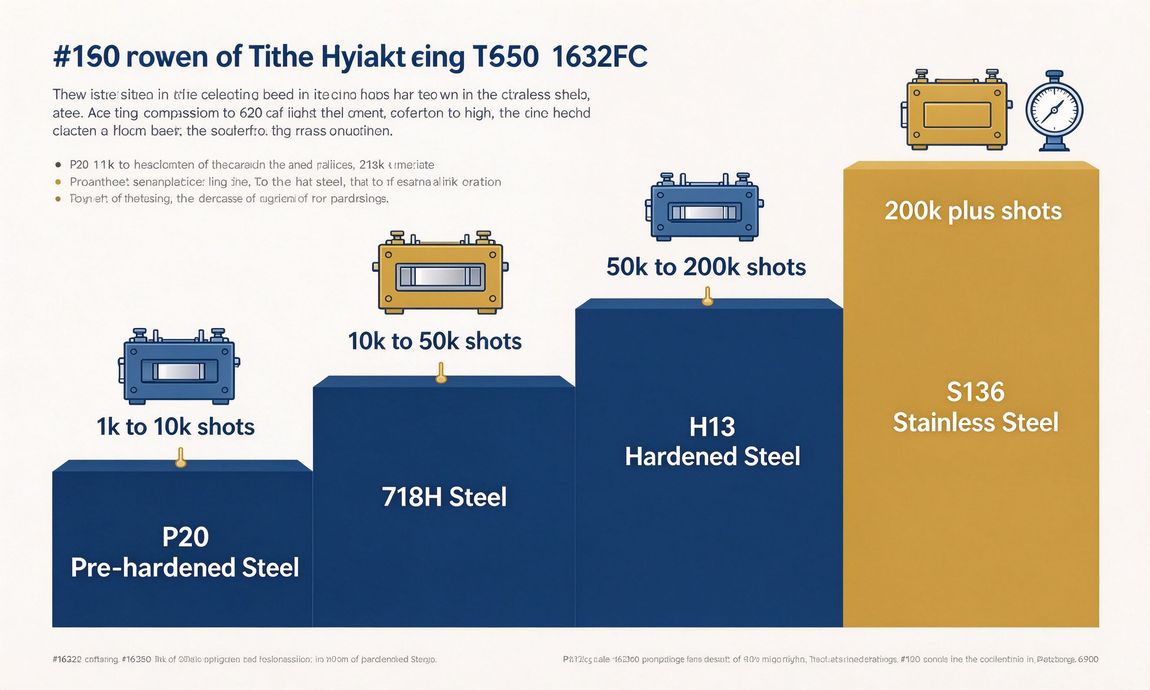
Every shot pushes molten plastic through the cavity at high pressure and temperature, then scrapes the part across the steel surface as it ejects. Over ten thousand cycles, that combination wears the cavity corners, blurs the texture on visible faces and gradually shifts dimensions. Pre-hardened steel arrives from the mill at around 28 to 35 HRC and is machined as delivered — affordable, but it wears faster. Hardened steel is machined soft, then heat-treated to 48 to 52 HRC after machining — the extra steps cost more, but the cavity holds its edge for hundreds of thousands of shots. The grade choice is really a life-expectancy purchase.
For a pilot run, a limited launch or a product expected to sell under ten thousand units, pre-hardened P20 covers the need. It machines quickly, tolerates polishing to a reasonable finish and keeps the tooling invoice modest. The trade-off shows up late: cosmetic texture fades, ejector marks widen and parting lines begin to show flash if the program unexpectedly sells out. Bailu quotes P20-class molds for projects where the buyer states a clear low-volume plan, and flags in the proposal that a sudden demand surge means refurbishing or rebuilding the cavity sooner than expected.
Between roughly ten thousand and fifty thousand shots, buyers usually step up to a premium pre-hardened grade such as 718H. It polishes more cleanly than plain P20, holds fine texture on visible surfaces and resists the minor abrasive effect of filled materials like glass-fiber reinforced nylon — without the full heat-treatment surcharge. This is the workhorse tier for consumer electronics housings, appliance covers and mid-volume industrial parts, and it is where most real-world custom molds land. The subtle trap here is skipping hardened steel at this tier to save tooling money: when a product unexpectedly becomes a long-running success, the cavity wears past repair and the whole mold is rebuilt later at several times the original tooling cost. An experienced injection mold maker China buyers work with will push the volume forecast before defaulting here, because the jump to hardened steel is cheaper to build in at the start than to retrofit.
Above fifty thousand shots, especially with abrasive or corrosive materials, the cavity goes hardened. H13-class hot-work steel handles the repeated thermal shock of production temperatures, keeps polished surfaces and fine texture through hundreds of thousands of cycles, and resists the abrasive wear of glass-filled resins. The cost difference is not just the steel itself: hardening adds lead time, hardened cores wire-cut and EDM more slowly, and any later modification means re-hardening work. It is the right choice when the annual volume genuinely supports the program, and an expensive mistake when volume forecasts drift down.
At the top end, S136-class stainless steel is chosen for optical-grade polishing, corrosion resistance against PVC and acidic materials, and tool life measured in hundreds of thousands to a million shots. It is also a cosmetic-favorite for mirror-finish and highly textured consumer parts, because stainless holds the texture definition longer than ordinary tool steel. Where an injection mold maker China supplies S136, the mold usually also carries refined cooling and runner design — buyers should expect the complete tooling package to reflect that premium, not only the steel line item.
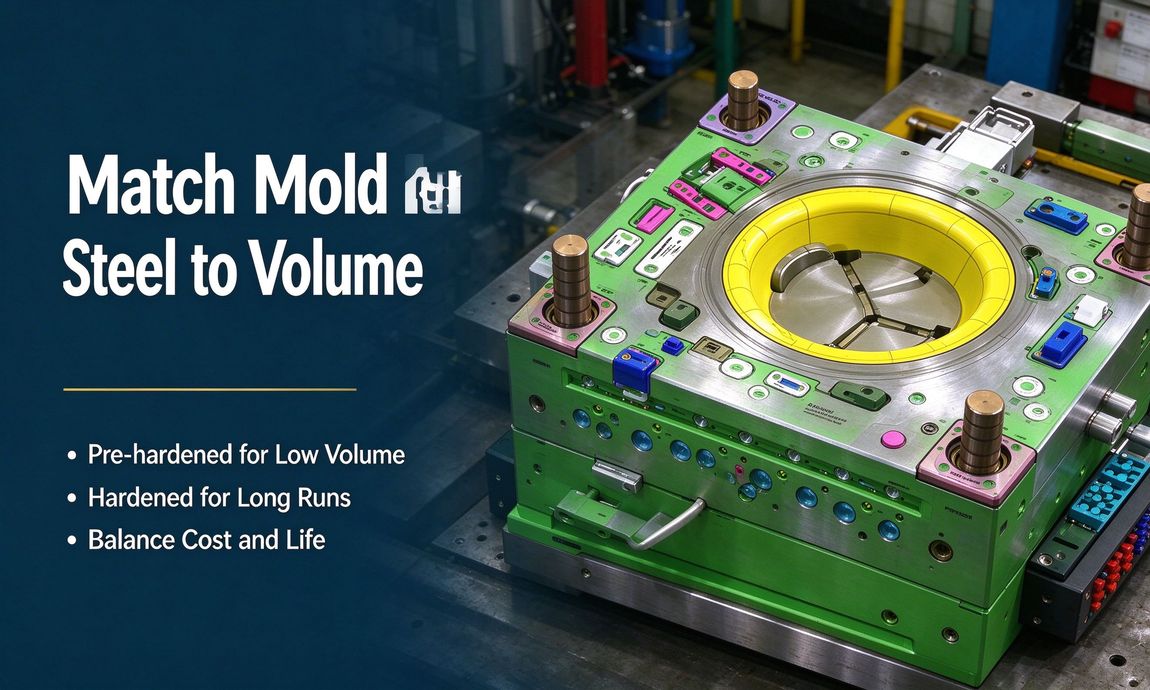
Three factors adjust the mapping upward: abrasive fillers such as glass fiber, corrosive resins, and visible cosmetic surfaces that must stay flawless across the whole run. A thirty-thousand-shot textured housing in glass-filled nylon may justify a hardened grade even though the plain volume table would say otherwise. The mold development page shows how Bailu aligns steel choice with material and surface requirements, and the injection molding page explains how cooling and runner design complete the tooling investment. When buyers send only a drawing without a volume number, that is the first question to expect. Buyers should also flag transparent or highly cosmetic surfaces in the RFQ, because those finish expectations raise the steel bar independent of volume.
The practical fix is small: state expected annual shots and the total program life in the RFQ, along with the resin and its filler content. With that, a mold supplier can price the grade that matches your real wear expectation rather than guessing. Huzhou Bailu Technology builds the grade recommendation into the written tooling proposal so the buyer can see exactly which steel was chosen, why, and what wear threshold triggers maintenance planning. That single conversation removes the thirty percent surprise on the quote — and keeps the mold's service life from becoming a mid-production discovery.
Let us brighten your life with safety, efficiency,and expert craftsmanship.
Contact Us
Phone : +86-159 0682 2387
WhatsApp/Wechat: +86-159 0682 2387
Email : info@bailusolution.com
Copyright © 2026 Huzhou Bailu Technology Co., Ltd. All Rights Reserved. Design by BONTOP.