


Time:Nov 03,2026
By:Bailu
Your mold runs a neat-looking cycle, but after every shot a big sprue-and-runner blob of plastic falls out, gets chopped, and slowly becomes waste. On a cold-runner mold that blob is normal — on a hot-runner mold that blob does not form at all. Buyers hearing "hot runner" for the first time usually ask the wrong question: whether it is better. The right question is at what volume the extra tooling cost stops being a premium and starts saving money on every single part.

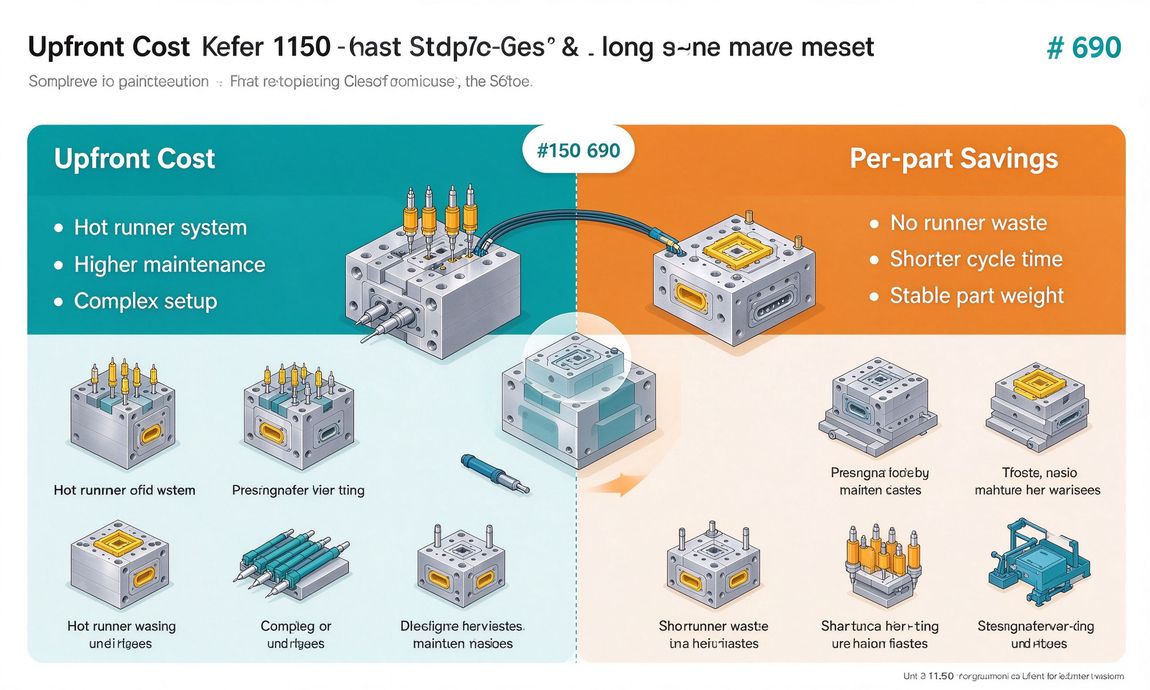
In a conventional cold-runner mold, molten plastic flows from the machine nozzle through a sprue and branching channels inside the mold, then into the cavities. Those channels freeze solid with every shot, and the runner scrap that comes out has to be separated, reground and usually discarded or sold as scrap. A hot-runner mold replaces those channels with heated manifolds and nozzles that keep the plastic molten all the way to each gate. No runner solidifies, no scrap drops, and the machine can fill the next shot immediately. The plastic you pay for goes into parts instead of into the trash.
The per-part economics stack up in three places. Material waste drops to near zero — especially valuable with expensive engineering resins, glass-filled materials and color-matched batches where regrind cannot be reused. Cycle time shortens, because cooling the thick frozen runner is no longer part of the cycle, and the machine ejects finished parts directly. Part weight and dimensional stability also stay consistent shot to shot, since every cavity receives material at a controlled temperature and pressure. On a multi-cavity tool, that consistency tightens the cavity-to-cavity spread: parts from different cavities weigh and measure closer to each other, which simplifies assembly downstream and reduces borderline units at incoming inspection. For a high-volume consumer product, those three effects compound across months of production.
The honest side of the ledger starts with the hot runner system itself: heated manifolds, valve gates, temperature controllers and the engineering to lay them out around your cavities. Lead time grows slightly, and maintenance becomes a specialist job — clogged gates, heater failures and leak points require trained service. Color changes take longer because the heated system holds material that has to be purged cleanly, and a complex hot-runner system constrains later geometry changes to the mold. A plastic mold development manufacturer China buyers trust will price this system as its own line item so the buyer can see the trade, not just the total.
The break-even point is where avoided runner waste plus saved cycle time covers the system premium within your production life. In practice, the crossover usually sits somewhere around the mid-five-figure shot range for standard parts — comfortably above pilot runs and limited launches. Below that volume, a cold-runner mold amortizes its cheap tooling and the scrap waste is a fraction of the budget. At fifty thousand shots and up, especially with a pricey resin or a multi-cavity layout, the hot runner starts paying back within months rather than years. Bailu Tech presents both mold options side by side at the quotation stage, so the buyer compares the premium against projected savings before the contract is signed. Bailu builds this break-even math into the tooling proposal so the buyer decides from numbers, not from the word "premium" on a quote.
Two quieter advantages matter for specific designs. Family molds with very different part sizes feed each cavity independently through its own gate, balancing fill that cold runners handle poorly. And gate quality improves: valve-gated hot runners leave small, controlled gate vestige on visible surfaces, which helps for cosmetic housings where a visible cold gate mark would need trimming. The mold development page explains how gate placement and cavity layout interact with runner choice, and the injection molding page shows the production-side logic around cycle time and material handling.
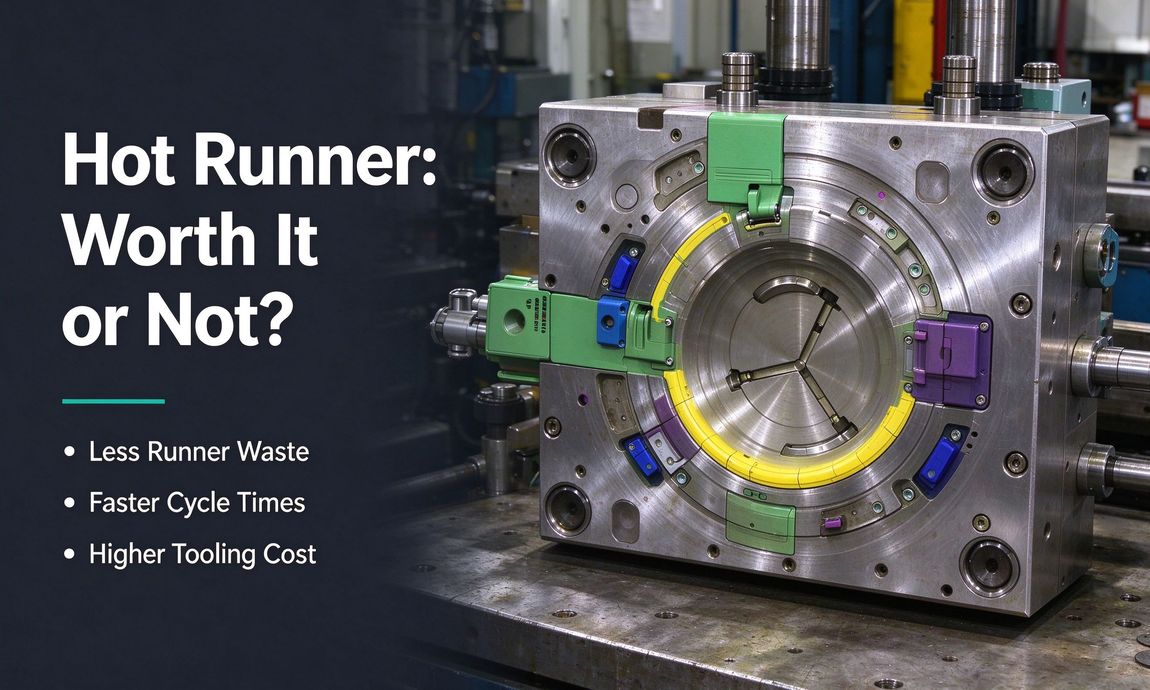
Small-batch products, frequent color changes, and parts built around a flexible design that may change soon are all places where the cold runner wins. A short product life means the system premium fails to amortize; a frequent color rotation means long purge sessions; a product under active development means the fixed heated layout complicates revisions. For a pilot run or a low-volume launch, the simpler mold is the disciplined choice, and Huzhou Bailu Technology will say so rather than sell the upgraded system.
When you ask suppliers about hot runners, skip the brochure description and request the calculation: system premium versus avoided material waste versus saved cycle time, over your planned annual shots. A supplier who can hand you that arithmetic in writing is treating the decision as an investment analysis. Request the projected runner scrap weight per cycle and the expected cycle-time saving as two line items; they are the figures that set the payback period, and any supplier running regular production can estimate them from your resin choice and part size. For buyers scaling from prototypes to tooling, that single table usually settles whether the hot-runner mold belongs in the next quote — and whether the savings will quietly fund the next phase of the program.
Let us brighten your life with safety, efficiency,and expert craftsmanship.
Contact Us
Phone : +86-159 0682 2387
WhatsApp/Wechat: +86-159 0682 2387
Email : info@bailusolution.com
Copyright © 2026 Huzhou Bailu Technology Co., Ltd. All Rights Reserved. Design by BONTOP.